

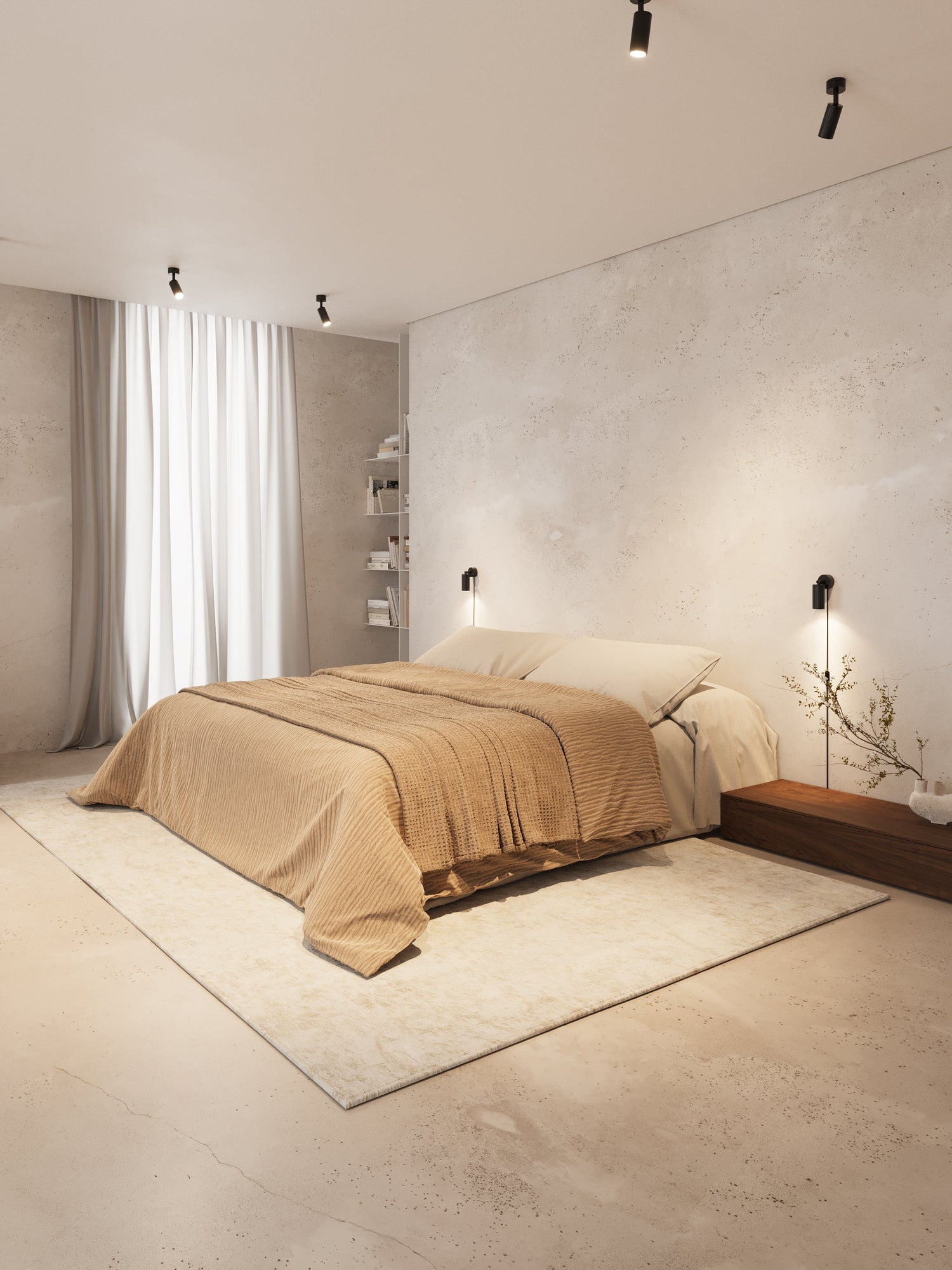
Good lighting is rarely about just one lamp. It is about distribution. About letting some light sources take care of the overview, while others create direction, calm and atmosphere. At Rama Lights, form and function go hand in hand in a Nordic design language with clean lines and honest materials. That is exactly why it makes sense to think of wall and ceiling lights as a collaboration rather than as two separate choices.
When light is distributed correctly, a room simply feels easier to be in. The ceiling provides the general overview and helps you move through the space effortlessly, while the wall brings depth, zones and a more human scale. That is the balance that makes the difference between a room that is merely lit and one that feels considered.
Ceiling lights create overview and calm in the room
Ceiling lights and ceiling spots are the natural starting point because they create the even base. Their role is not to dominate, but to hold the room together and make it feel functional and clear.
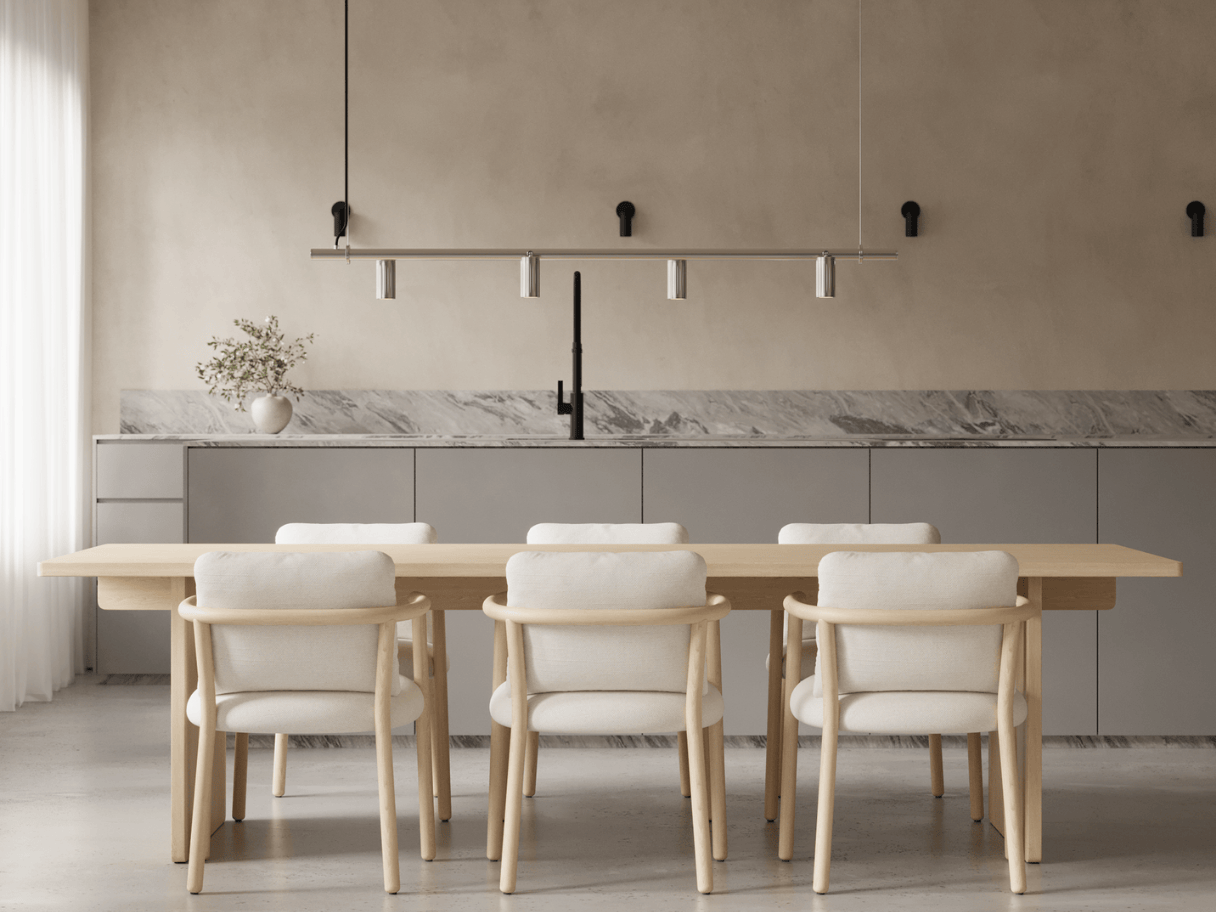
In a kitchen or open-plan living area, that means the ceiling light should help you through the practical rhythm of the day. It should make it easy to move around, see the work surfaces and keep the lines of the room clean. In spaces with a long table and a linear pendant, it becomes especially clear how much calm is created when the lighting follows the geometry of the furniture. Here, ceiling light is not only practical; it also helps define the room itself.
Wall lights add depth and direction
If the ceiling gives you overview, the wall gives you character. Wall lights bring direction into a room, define zones and create the quiet balance that allows materials, colours and furniture to fall into place.
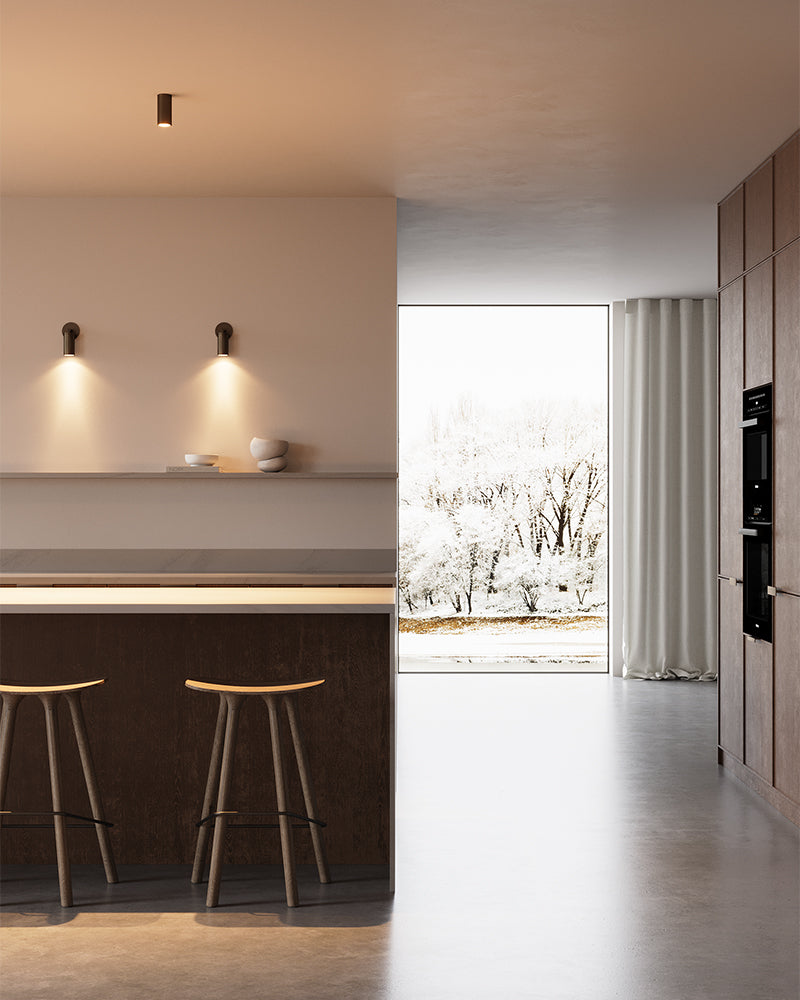
That is also why wall lights rarely work best as the only source of light. Instead, they are essential when you want to give a kitchen, living room or hallway more depth. In a kitchen, for example, a row of wall-mounted spots above a worktop can introduce rhythm to a large surface. Rather than flattening the room, the light pulls the wall forward and gives the space a more architectural expression.
The balance between wall and ceiling is what makes a room feel comfortable
The most interesting choice is therefore not whether you need wall lights or ceiling lights. It is how they should be distributed. A good starting point is to let the ceiling handle the base lighting and allow the wall to shape the mood and the more focused points of light. In that way, the two layers do not compete, but support one another.
In a kitchen, for instance, ceiling spots or a linear ceiling or pendant solution can provide an even overview across the table, island and circulation areas. The wall lights can then be used to bring life to the back wall, highlight materials and make the room feel calmer in the evening. In a living room, the same principle is just as effective: the ceiling makes the room functional, while the wall makes it welcoming.
The same design language on wall and ceiling creates a more cohesive home
One of the strengths of Rama Lights is that several models share the same design language across different functions. That makes it easier to create coherence, even when the lights solve different tasks throughout the home.
It also means that you do not have to choose between a technical look and an atmospheric one. You can stay within the same family of lighting and still achieve different functions. The ceiling can remain discreet and precise, while the wall brings warmth and direction, without the home feeling like a mix of unrelated ideas.
Materials also play a role in the distribution
When you work with both wall and ceiling lighting, the choice of material becomes even more important. Steel creates a sharp and calm line that works beautifully in kitchens and spaces with pale stone and muted surfaces. Brass adds warmth and depth and can make wall lighting feel softer and more tactile, especially in rooms where you want a gentler atmosphere.
The collections naturally move between steel, brass and browned brass, which means you can choose the same function in different moods depending on the space.
Here are three simple ways to think about the distribution:
-
Let the ceiling take care of the base light and the wall create rhythm
-
Use the same finish across wall and ceiling if you want a calm expression
-
Choose wall lighting where you want to create zones, and ceiling lighting where you want to create overview
When the light falls right, calm falls into place
That is what good light distribution is really about. Not filling the home with more lamps than necessary, but giving each lamp a clear role. Ceiling lights should make the room work. Wall lights should make it come alive. When those two things are in balance, a calm appears that can both be seen and felt.
At Rama Lights, the lamps are clearly designed as more than individual products. They are made to be part of a whole, where wall and ceiling work together to create a home that feels light, functional and complete.

Leave a comment
All comments are moderated before being published.
This site is protected by hCaptcha and the hCaptcha Privacy Policy and Terms of Service apply.